Understanding the Bouwlening: Your Guide to Construction and Renovation Financing
Demystifying construction loans: compare financing options, check eligibility, and learn how to pair your loan with energy subsidies for maximum value.
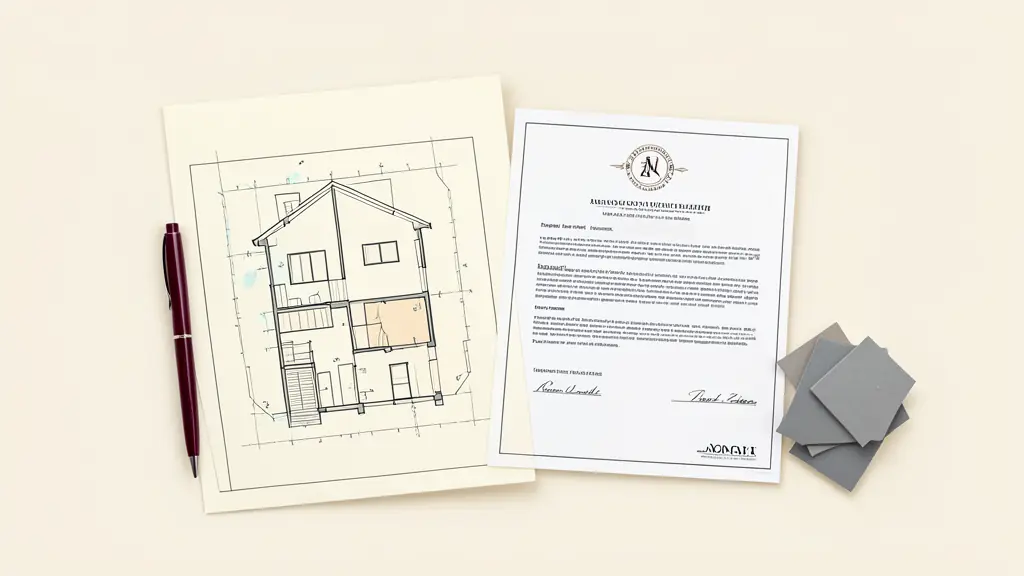
A bouwlening is a specialized short-term funding tool designed specifically for building or renovating a property. Unlike a standard mortgage, these funds are not released in one lump sum but are drawn in stages as work progresses, reflecting a different risk profile and disbursement structure.
No time to read?
- Construction loans are disbursed in stages based on project milestones.
- Public loans often offer better rates but have stricter income and property age limits.
- Renovation premiums can often be used to offset the cost of a construction loan.
- Approval requires detailed project documentation, including verified contractor quotes.
Construction Loans vs. Renovation Financing
The fundamental difference between these two financial paths lies in the collateral and the project scope. A bouwlening is primarily used for ground-up builds or total reconstructions where the final asset does not yet exist. In these cases, the lender evaluates the potential value of the completed home alongside the current land value.
Conversely, a renovation loan focuses on enhancing an existing structure. The financing structure here is typically based on the existing equity of the home combined with the projected increase in value following the improvements. While a construction loan covers the entire build from the foundation up, renovation financing is often more modular, targeting specific upgrades to housing quality or energy performance. To stay compliant with evolving regulations, homeowners should review the latest construction loan policy changes to ensure their funding strategy aligns with current municipal standards.
Comparing Your Financing Options
Depending on the scale of your project and your borrower profile, you can choose between public-backed loans, traditional bank products, or flexible credit lines. A construction credit is typically a structured loan with a specific drawdown period, whereas a credit opening (kredietopening) functions more like a revolving line of credit, allowing you to borrow only what is needed at any given moment.
| Financing Type | Best For | Key Advantage | Funding Mechanism |
|---|---|---|---|
| Public Energy Loan | Energy-saving works | Lower interest rates | Government-backed |
| Traditional Mortgage | Full builds / Large renovations | High loan ceilings | Asset-backed |
| Credit Opening | Small to mid-scale updates | Flexibility | Draw-down as needed |
| Specialized Renovation Loan | Targeted home improvements | Faster approval | Project-specific |
For those prioritizing energy efficiency, combining a private loan with public aid via My VerbouwLoket can significantly reduce the overall cost of the project.
Borrowing Limits and Eligibility Requirements
Approval for construction or renovation financing is not automatic; it depends on a strict eligibility screening. Lenders and public authorities evaluate your repayment capacity and the technical viability of the project. For instance, an energy loan often requires the project to meet specific energy performance thresholds to unlock preferential rates.
Common eligibility criteria include:
* Income bracket thresholds: Your annual income must fall within specific limits to qualify for public aid or subsidized rates.
* Loan-to-Value (LTV) Ratio: The total loan amount is constrained by the estimated value of the property after completion.
* Property Condition: Some loans are only available for homes of a certain age or those requiring urgent structural improvements.
* Proof of Investment: Valid contractor quotes and construction permits are mandatory before any credit opening is granted.
Interest rates may fluctuate based on the chosen term (fixed vs. variable) and the energy-related nature of the works, with some products offering a fixed interest rate to reduce long-term financial uncertainty.
The Application and Approval Workflow
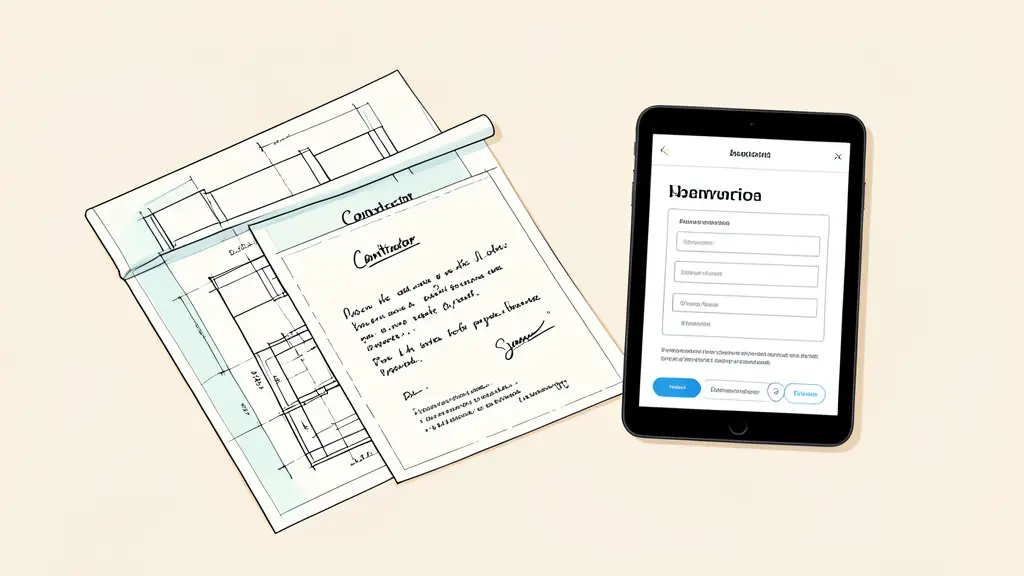
Securing your funding requires a methodical approach to documentation. The process begins with the application submission, where you provide a detailed renovation budget, blueprints, and official contractor quotes. Once the eligibility verification is complete, the lender establishes the credit opening.
The disbursement of funds follows the evolution of your works:
1. Application: Submit the file through the bank or an online portal like My VerbouwLoket.
2. Approval: The lender verifies the borrower profile and project feasibility.
3. Drawdown: Funds are released in stages (tranches) based on the progress of the construction.
4. Verification: Periodic inspections may be required to prove the work is completed before the next payment is released.
Throughout this process, you can simultaneously apply for renovation premiums to offset future costs. These grants are typically processed after the proof of investment is verified.
Costs, Repayment, and Potential Pitfalls
Every financing route carries specific risks and costs. While mortgage financing offers the lowest rates for large sums, it often involves higher notary costs and a more rigid repayment term.
Consider these critical factors when choosing your path:
* Reserved Balance Fee (Reserveringsprovisie): If you do not draw down the full approved loan amount within the specified period, the lender may charge a fee on the unused balance.
* Rate Volatility: Variable rates can increase monthly installments, whereas a fixed rate provides stability.
* Construction Delays: If the project exceeds the 12-month drawdown period, you may face penalties or be forced to convert the construction loan into a permanent mortgage prematurely.
* Repayment Capacity: Ensure the monthly installment does not exceed a sustainable percentage of your net income.
Comparing the APR (Annual Percentage Rate) across different lenders is the most effective way to avoid overpaying for your credit.
Maximizing Grants and Renovation Premiums
The most strategic way to finance a renovation is to integrate government subsidies into your loan structure. Public aid, such as My VerbouwPremie, is designed to lower the financial burden of improving energy performance.
The most powerful tool here is the premium offset mechanism. Instead of receiving the grant as a cash payment to your bank account, the premium is applied directly to the outstanding loan balance. This reduces the total debt, thereby lowering the remaining interest payments and shortening the repayment period.
To avoid funding gaps, you should prioritize the loan-to-premium sequence: secure your construction loan and establish the credit opening first, then apply for the energy subsidies. This ensures that the project is fully funded from day one, and the subsequent premiums act as a financial accelerator rather than a primary source of liquidity.
FAQ
How does a credit opening differ from a standard renovation loan?
A credit opening allows you to draw funds as needed up to a certain limit, paying interest only on what you use, whereas a renovation loan is typically a lump sum with a fixed repayment schedule.
When does the repayment of a construction loan typically begin?
Repayment usually begins after the construction phase is complete and the loan is converted into a permanent mortgage, though some interest-only payments may occur during the build.
Who is the ideal candidate for a public energy loan?
Homeowners focusing on energy-efficiency upgrades who meet specific income thresholds and are looking for lower-than-market interest rates.
Envie d'aller plus loin ?
Laisse ton email, on te prévient dès qu'un nouvel article sort.