Top PropTech Companies: A Guide to Real Estate Technology and Vendor Selection
From AI-driven management to smart building ESG tools, explore the top PropTech companies transforming the real estate landscape.

PropTech refers to the integration of software and hardware to optimize every stage of the real estate lifecycle. From automating tenant screening to enhancing building energy efficiency, these technologies streamline operations and increase asset value.
No time to read?
- PropTech spans the entire real estate lifecycle, from construction (ConTech) to property management and finance.
- Leading companies are currently pivoting toward AI-driven automation and ESG sustainability tracking.
- Vendor selection should prioritize API integration and data security over flashy AI features.
- The market is heavily concentrated in US and European hubs, though global adoption is accelerating.
What Are PropTech Companies?
At its core, PropTech is the application of technology to disrupt and improve the real estate industry. This encompasses a wide range of real estate technology tools designed to enhance the way people buy, sell, manage, and inhabit properties. The scope of these companies extends across the entire value chain, including the acquisition of land, the actual construction process, ongoing property management, and the final sale or lease.
Modern proptech companies are no longer just providing simple listing websites. They are building comprehensive ecosystems that integrate financial services (FinTech), construction automation (ConTech), and data analytics to solve systemic inefficiencies, such as idle rent reserves or fragmented property management operations.
Leading PropTech Companies by Market Segment
The PropTech landscape is divided into specialized sectors, each targeting specific pain points for owners, developers, and tenants. While some focus on the operational side of property management, others leverage ConTech to digitize the physical act of building.
The global PropTech market value was $36.55 billion in 2024.
Market Leaders by Category
| Segment | Key Players | Core Value Proposition | Target User |
|---|---|---|---|
| Property Management | AppFolio, Guesty, Hostaway | PMS, multi-channel distribution, STR management | Landlords, STR Operators |
| Construction Tech | Procore, OpenSpace, JobNimbus | Workflow automation, computer vision, FSM | Contractors, Developers |
| Real Estate Finance | Better, Bilt Rewards, Hometap | AI-powered banking, home equity investment | Homeowners, Renters |
| Smart Buildings | Infogrid, Runwise, Metropolis | IoT sensors, energy monitoring, checkout-free payments | Facility Managers, Commercial Owners |
Segment Deep Dives
Construction and Field Services
Companies like ServiceTitan and JobNimbus are redefining labor productivity. ServiceTitan, founded in 2012, addresses a field service industry valued at over $600 billion, serving 8,000+ customers with a net retention rate exceeding 110%. Meanwhile, OpenSpace utilizes computer vision to capture construction progress, having already mapped 11 billion square feet across 100+ countries.
Residential and Rental Innovation
Bilt Rewards focuses on the US rental market opportunity, which exceeds $500 billion, targeting 44 million renter households. On the ownership side, Pacaso is democratizing luxury second-home ownership through fractional ownership, expanding into over 40 markets across the US and Europe in under three years.
Commercial and Infrastructure
Metropolis Technologies is streamlining urban mobility with checkout-free payment systems, reaching over 50 million customers. For building efficiency, Runwise focuses on New York and Boston, managing nearly 2,000+ buildings to reduce energy waste.

High-Growth Trends: AI, IoT, and ESG
The current growth trajectory of PropTech is driven by the shift from static management to predictive intelligence. With $3.2 billion in venture capital invested in AI-powered PropTech in 2024, the industry is moving toward a « real estate operating system » model.
AI and Predictive Analytics
Artificial intelligence is transforming revenue management through dynamic pricing, allowing operators to adjust rates in real-time based on market demand. Beyond pricing, AI is utilized for predictive maintenance, identifying equipment failures before they occur to reduce emergency repair costs.
IoT and Smart Infrastructure
The integration of IoT sensors allows for the creation of a truly smart building software ecosystem. These tools provide real-time data on occupancy, lighting, and HVAC performance. This connectivity eliminates « dead expenses » by automating heating-system controls and reducing carbon emissions.
ESG Compliance and Sustainability
Environmental, Social, and Governance (ESG) criteria are now central to institutional investment. PropTech platforms now offer dedicated ESG compliance reporting to help owners track energy efficiency and social impact. This is critical as $2.5 trillion in real estate loans are expected to mature by 2027/28, with lenders increasingly tying financing terms to sustainability performance.
The Vendor Selection Framework: How to Compare PropTech Platforms
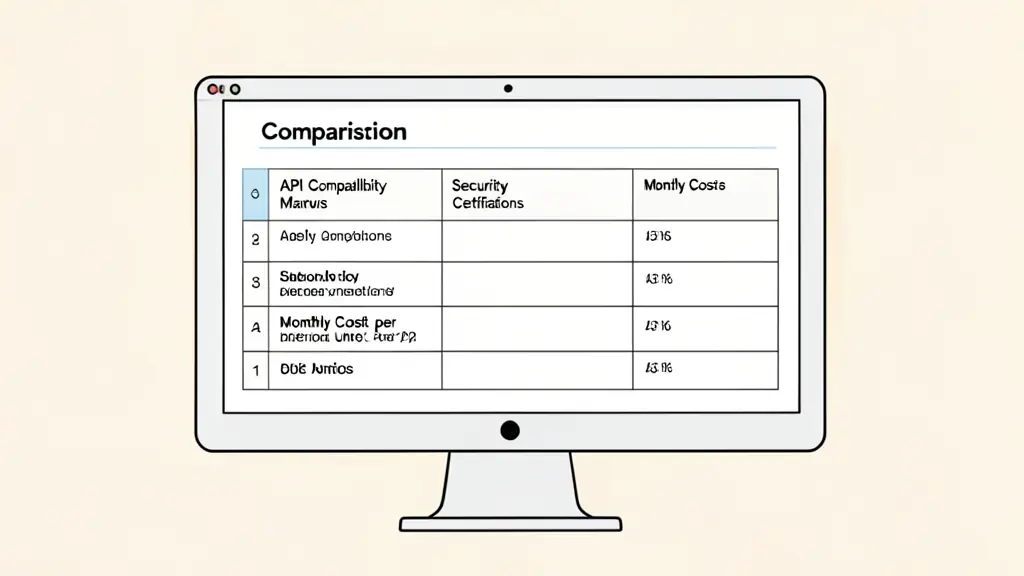
Selecting a vendor requires moving beyond the sales pitch to evaluate technical scalability and long-term ROI. The goal is to implement property management automation that reduces headcount or increases yield without creating new technical debts.
Evaluation Criteria
- Interoperability and API Integrations: Ensure the software can communicate with your existing CRM, ERP, or HCM systems. A closed ecosystem leads to data silos and manual entry.
- Data Ownership and Security: Verify who owns the data generated by the platform. Require SOC2 compliance or similar security certifications to protect tenant and owner privacy.
- Scalability vs. Complexity: A tool that works for 10 units may fail at 1,000. Evaluate the vendor’s ability to handle multi-family, commercial, and STR asset classes within a single interface.
- Implementation Timeline: Document the onboarding process. High-growth tools often have « plug-and-play » SaaS models, while enterprise ERPs can take months to deploy.
- Measurable ROI: Calculate the total cost of ownership (TCO) against expected gains in net operating income (NOI) or reductions in operating expenses (OpEx).
Regional Hubs: PropTech Ecosystems in the US and Europe
PropTech development is heavily influenced by local geography and municipal regulation. Certain hubs emerge because they solve specific regional problems, such as New York’s aging building stock or London’s complex zoning laws.
- New York City: A primary hub for commercial PropTech and energy efficiency tools. The city’s strict carbon emission laws have accelerated the adoption of ESG real estate technologies and smart building sensors.
- San Francisco and Silicon Valley: The center for venture-backed innovation, focusing on AI, fractional ownership, and large-scale SaaS platforms that prioritize rapid scaling.
- London and Europe: A leader in sustainable urban planning and regulated rental markets. European PropTech often focuses more heavily on government compliance and social housing efficiency.
- Texas (Houston/Austin): Growing as a center for construction technology and land management, driven by rapid residential expansion and large-scale development projects.
Implementation Risks and Limitations
Despite the promise of digital transformation, the gap between software capabilities and operational reality remains a significant risk.
- AI Bias and Algorithmic Error: Automated rental screening or pricing algorithms can inadvertently introduce bias or fail to account for hyper-local market anomalies, leading to lost revenue or legal challenges.
- Vendor Lock-in: Over-reliance on a single « all-in-one » platform can make it prohibitively expensive to switch vendors, as migrating massive amounts of historical property data is complex and costly.
- Data Privacy Concerns: The collection of granular tenant data via IoT sensors and smart locks raises significant privacy issues. Failure to implement strict data governance can lead to regulatory fines.
- Implementation Failure: Many firms underestimate the cultural shift required for staff to adopt new software. Without proper training, expensive tools often become « shelfware » that is ignored by the field team.
FAQ
What is the difference between PropTech, ConTech, and FinTech?
PropTech is the broad umbrella for real estate technology. ConTech (Construction Tech) specifically focuses on the building process, while FinTech (Financial Tech) focuses on the capital, lending, and payment side of transactions.
How do PropTech companies use AI in real estate?
AI is used for predictive analytics to forecast property values, automating tenant screening, optimizing energy use in smart buildings, and implementing dynamic pricing for rentals.
Who typically invests in PropTech startups?
Investment comes from traditional Venture Capital (VC) firms, real estate private equity funds, and corporate venture arms of large developers or property management conglomerates.
Envie d'aller plus loin ?
Laisse ton email, on te prévient dès qu'un nouvel article sort.